Severe Storm Threats Highlight Need for More Resilient Homes and Buildings
PR Newswire
DENVER, April 30, 2026
Concrete Masonry Checkoff (CMC) Urges Impact-Resistant Materials to Help Withstand Nature's Most Destructive Forces
DENVER, April 30, 2026 /PRNewswire/ -- As early-season storm systems put millions of Americans at risk for tornadoes, hail and damaging winds, preparation is critical — particularly knowing where and how to take shelter. That storm-forward reality has spawned renewed interest in dense, impact-resistant materials, like concrete block, that can withstand nature's most destructive forces.
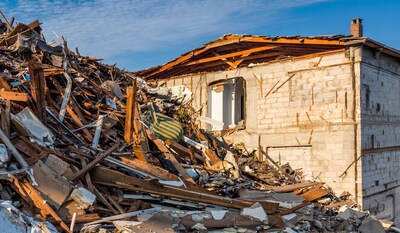
The 2025 tornado season saw 1,557 tornadoes rip across the United States, claiming 67 lives and causing $1.9 billion in damage. While forecasters predict an "average" 2026 season with 1,050 to 1,250 tornadoes, they warn conditions will still bring powerful winds, heavy rainfall and flash flooding.
Tornado risk is also shifting. Activity is increasing in the Mississippi Valley and Southeast while declining in the traditional Great Plains "Tornado Alley." This shift is attributed to warmer Gulf moisture and changing atmospheric conditions, putting more densely populated areas at risk and increasing the likelihood of nighttime tornadoes.
"Most people don't think about the material used to build their house, but those material decisions matter," said Kim Spahn, structural engineer and CEO of the Concrete Masonry Checkoff. "There's a reason schools, hospitals and community centers built with concrete masonry (CMU) are used as shelters during storms. They stand their ground."
Resilient Building Codes Matter
U.S. building codes now include specific, National Institute of Standards and Technology (NIST)-backed requirements to help structures better withstand tornadoes by strengthening the building envelope. These new standards prioritize impact-resistant materials, like concrete masonry, for critical infrastructure to withstand flying debris and intense wind speeds. These rules currently focus on "must-have" buildings like hospitals, schools and fire stations.
Marc Levitan, a wind and structural engineer from NIST, was part of a team that studied damage from the EF5 tornado that struck Joplin, Missouri, in 2014. He also conducted research on tornadic winds that led to the new model code released in 2024.
"You try to keep your emotions in check because lives were lost," Levitan said as he described his Joplin visit for an NIST article about the new code. "...Tornadic winds are very different than straight-line winds."
High Winds and Projectiles
One of the greatest dangers during a tornado is flying debris. Research from the National Wind Institute at Texas Tech University shows that a 9-lb beam traveling in excess of 45 mph will penetrate standard wood-frame walls, while engineered masonry systems are designed to resist high-speed impacts, including a 15-lb beam traveling at 100 mph.
Because reinforced and fully grouted CMU walls can withstand winds up to 250 mph and debris impact over 100 mph (similar to EF5-level forces), the Federal Emergency Management Agency (FEMA) identifies it as a good option for use in safe rooms and tornado shelters (FEMA P-361). Reinforced and fully grouted systems also resist uplift and maintain enclosure integrity during high-pressure events.
Protect Yourself This Storm Season
Whether building or preparing an existing room, these steps can help protect lives and property:
- Seek the strongest core: Go to an interior, windowless room on the lowest floor, preferably one built with reinforced and fully grouted concrete.
- Choose protection over convenience: Small, enclosed spaces encased in concrete blocks provide better protection from flying debris.
- Identify safe zones: Know which areas of your home or office offer the most structural protection before an emergency occurs.
- Verify shelters: Confirm whether schools or offices have hardened safe rooms.
- Invest in structural resilience: Consider reinforced and fully grouted concrete masonry in new construction or retrofits.
As severe weather patterns evolve, preparation goes beyond tracking storms. It's about ensuring there is a place built to withstand them.
"Every design decision plays a role in long-term resilience," said Spahn. "Concrete masonry helps buildings stand up to high winds and flying debris, protecting lives and helping communities recover faster."
Media Contact:
Tom DiBacco
(202) 420-0593
tdibacco@clutchperformance.com

 View original content to download multimedia:https://www.prnewswire.com/news-releases/severe-storm-threats-highlight-need-for-more-resilient-homes-and-buildings-302758826.html
SOURCE Concrete Masonry Checkoff